On-demand swag printing vs. bulk ordering: the real math
Both models put logos on garments. They differ on one axis that changes everything downstream: when the printing decision gets made. Bulk decides months early with a forecast; on-demand decides at the moment a person points at a design. Here's how to pick.
The metric that settles arguments: cost per kept item
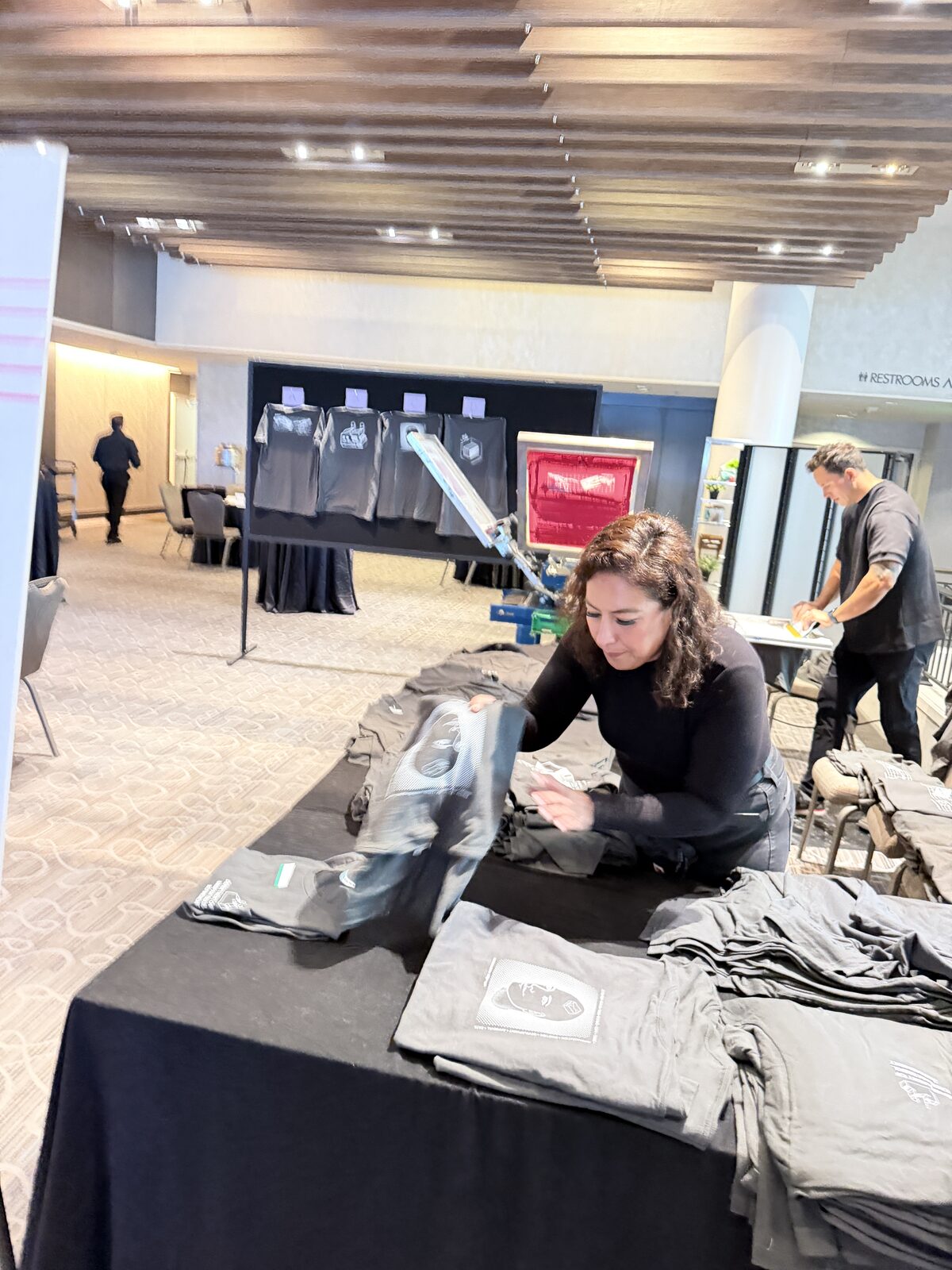
Invoice totals mislead because they price production, not outcomes. Divide total spend by items that ended up with a person who wanted them and the models separate fast. A $8,000 bulk order that yields 350 claimed pieces costs ~$22.86 per kept item. A $6,500 live station that presses 380 requested pieces costs ~$17.10 — and every one of those was made in the recipient's actual size.
| Bulk order | On-demand station | |
|---|---|---|
| Sizing | Forecast curve, guessed early | Chosen live by each person |
| Leftovers | Built into the safety margin | Structurally zero |
| Design risk | One committee pick for everyone | Menu of 3–8; guests self-sort |
| Experience value | None — it's fulfillment | The station is programming |
| Best at | Uniformity & huge volume | Events, choice, exact counts |
When bulk genuinely wins
- Uniforms and dress codes: identical gear, known roster, replenished on a schedule.
- Shipping-based programs: mailed gifts to remote staff — no event, no station.
- Massive single-SKU volume: thousands of identical pieces where per-unit price is the only variable that matters.
When on-demand wins
- Any gathering with unpredictable turnout: parties, conferences, onboarding cohorts, booth traffic.
- Date- or logo-volatile moments: rebrands in progress, event-dated designs, campaign-specific art that expires.
- When you need the moment, not just the merch: the press line is entertainment that also happens to produce the takeaway.
The hybrid most teams actually run
Bulk for the operational layer (uniforms, new-hire mailers to remote employees), live stations for the human layer (the party, the kickoff, the show booth). Budgets stay predictable, and neither model gets stretched into jobs it's bad at. If you're weighing a specific event, the cost answer has the current anchors and the format pages show how stations flex by occasion.